“A spiritually supportive atmosphere will most certainly be provided.  If we are requested, and it's likely that we would be, we will be happy to do the traditional prayers and ceremonies for the forty-nine days after the grand transition.  Literally, hospice care would not end at the moment of death.  In fact, the individual has certain stages of re-absorption, or possibilities, which then become alive – very, very alive - just after the clinical death

“The Hospice will be very important to Buddhist practitioners who have no support community, whose families may not be interested in having the traditional prayers done.  In that way, who will do it for them?  If they don't have a community affiliation or a monastery, or if they have no teacher who is taking care of that important transition, then we will be happy to continue this hospice care beyond the stage of clinical death.  

“And then of course the usual hospice care in accordance with the laws, regulations, and local ordinances which are currently in place, and the medical attention needed to be comfortable. We must have hospital beds, wheelchairs; places to put  slippers, and lots of hot tea! In addition, the patients will have very specialized care and environment for their Buddhist process.”

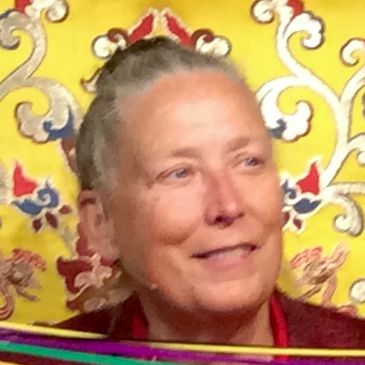
Domo Geshe Rinpoche

“So little is known about end of life in the West.  People are only now becoming aware that there are special processes and/or arrangements that need to be made for an individual at the end of life.  The most important process at end of life is to realize that the individual who is in the process of passing away is energetically returning to their source. The individual is literally reabsorbed into his or her original being (which, by the way, has no gender).  This process can go on for a significant amount of time before that individual passes away.  And during that time that individual needs to have a very different kind of care, in order for that process to go smoothly.   

“My vision of the hospice would be to allow people an opportunity to facilitate their Buddhist practice, whatever it may be, and give assistance to the patient at this important time when their life process is being reabsorbed.

“Even those new to Buddhism have been requesting a place which is supportive of their spiritual practice, as well as quietude for their final meditation—the quality of that meditation depends upon the individual.  I believe it is important for those who are surrounding the patient - the hospice workers, as well as any volunteers that may be coming to help – to have certain kinds of states of mind that do not impinge upon the individual, but rather support this important event, which I call the  Grand Transition.

Domo Geshe Rinpoche


A reincarnate lama and spiritual director of White Conch Dharma Center, Domo Geshe Rinpoche teaches Tibetan Buddhism coming from the Geluk tradition, and speaks from wisdom. Compassion is a regular subject of these teachings, and her vision of Grand Transitions Buddhist Hospice is a manifestation of her compassion for those who are involved in the end of life process. In the words of Rinpoche, when seriously pursuing a vision for the purpose of benefiting others, the right people will come to help. Interestingly, a high proportion of Rinpoche’s students are health care professionals, and many have been involved in professional or volunteer hospice work.


A religious organization in the Tibetan Buddhist tradition, consisting of lay and ordained practitioners with branches in California, Wisconsin, New Mexico, Illinois, and Ontario, Canada. White Conch spiritually supports individuals on the Buddhist path to enlightenment, for the benefit of all living beings, and considers it a sacred and precious opportunity to provide individuals at the end of their current life, and their families, with peaceful, compassionate and competent care.


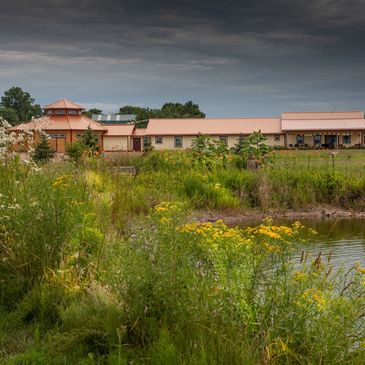
A vision of a hospice is coming to fruition in New Mexico. Those wishing to be in a Buddhist environment at the end of their life will be offered professional hospice care, comfort and an opportunity for meditation.


Sharon Leftwich, RN, BSN, has over two decades of experience in both at-home and inpatient hospice as a care provider, trainer and manager. Most recently she built a hospice from the ground up, which she manages in her beloved New Mexico. As a certified aromatherapist and practitioner/teacher of Reiki, she integrates both conventional and complementary approaches into her practice, and offers training in these integrative skills at numerous hospice conferences and organizations. She has personally developed blends of essential oils to help manage symptoms in the dying patient and their family members. Ms Leftwich has been a practicing Buddhist for more than a decade.

Betty Kramer, Ph.D. , a Professor at University of Wisconsin, ( Madison) School of Social Work, is a nationally recognized gerontology researcher, scholar and educator. She is coauthor of the first evidence-based textbook to profile grief and bereavement interventions for human service professionals entitled Living through Loss: Interventions across the Life-Span (2006). The recipient of two national awards, the John A. Hartford Foundation Geriatric Social Work Faculty Scholar Award, and the Project on Death in America Social Work Leadership Development Award, Dr. Kramer has received support to implement projects relevant to improving palliative care. Dr. Kramer offers her expertise as a consultant to the White Conch Buddhist Hospice, helping to deliver the best support possible to hospice residents and their families.